
Guide
Smart toilets: complete guide 2025
· Equipo Elora
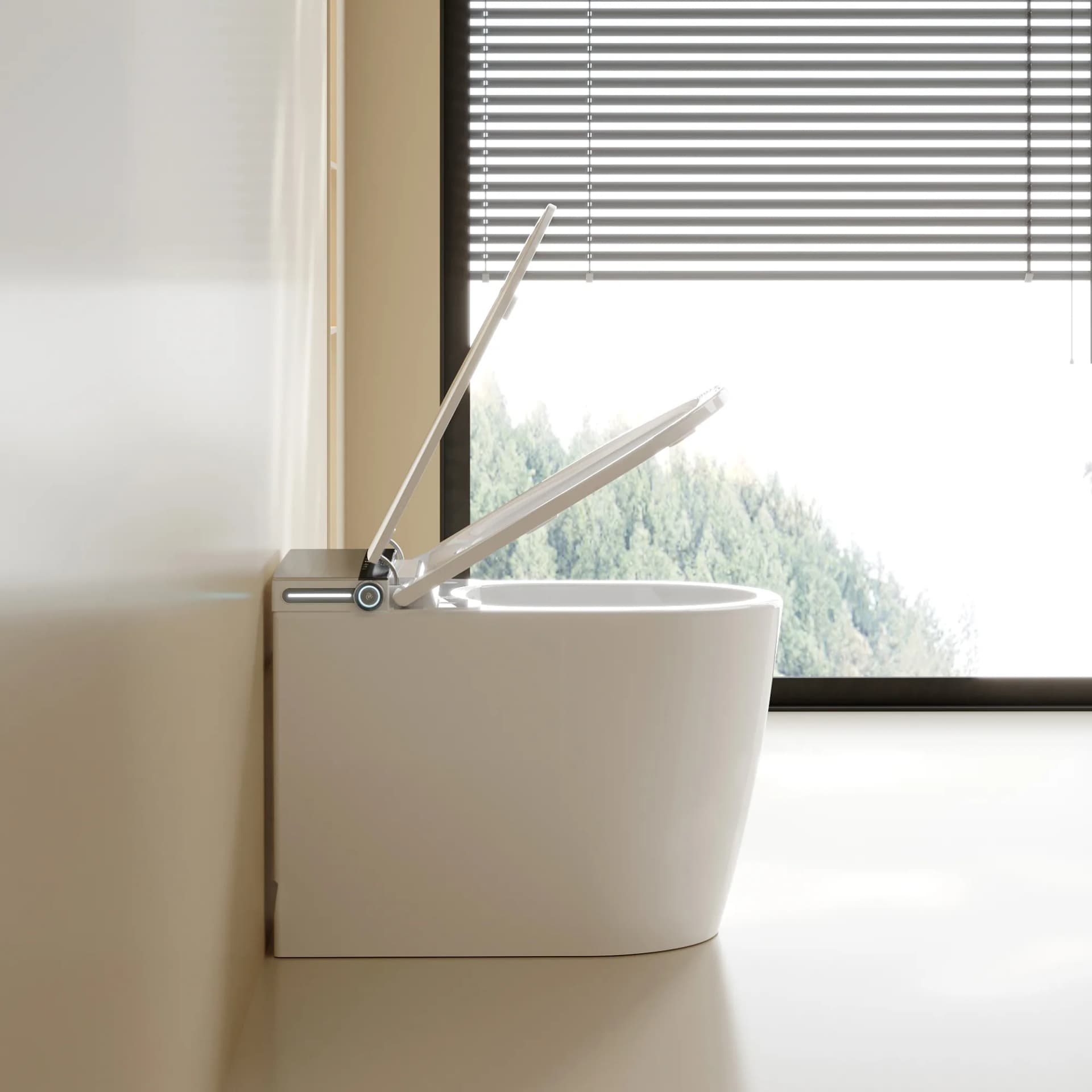
To understand, choose, and enjoy the new bathroom experience
If a few years ago someone had told you that a toilet could warm the seat, clean you with warm water, dry you with air, and automatically neutralise odours, you would have thought it was science fiction.
Today it has a name: smart Japanese toilet.
What began in Japan as a symbol of innovation and wellbeing is now arriving strongly in Europe and, especially, in Spain. We are no longer talking about an exclusive luxury, but a real solution that more and more families, hotels, and clinics are adopting.
In this complete 2025 guide you will find a summary of everything you need to know:
👉 If you would like to go deeper afterwards, each section of this guide will link to a dedicated article, where we explain it step by step with real examples.
What is a smart toilet and how does it work?
A smart toilet is much more than a toilet with buttons. It is designed to improve the daily experience by combining hygiene, comfort, and efficiency.
Key difference between a Japanese toilet and a smart bidet seat
- A smart bidet seat is an electronic lid that fits your existing toilet.
- A complete toilet already integrates all functions into its design and usually offers greater durability and a more refined look.
How does a smart toilet work in practice?
- The lid opens automatically when it detects your presence and, when you use it, the heated seat activates automatically (if you have set it up).
- With a remote control or side panel, you choose the water-cleaning function: adjustable pressure, temperature, and position.
- A warm-air drying system replaces paper.
- The toilet flushes automatically using fewer litres of water thanks to an efficient design.
- A deodorising filter absorbs unpleasant odours.
In short: you go from a routine habit to a superior comfort and hygiene experience.
👉 Would you like to see each function clearly explained (wash, dry, UV, flush, remote/voice control…)? Take a look at this practical guide to smart toilet features.
Key benefits you will notice from day one
The success of smart toilets is not only in the technology, but in what they deliver in real life:
Superior hygiene
Water cleans more effectively than paper. It is gentle on the skin, helps prevent irritation, and provides a feeling of freshness and hygiene that paper cannot match.
Health and accessibility
- Very useful for people with reduced mobility, older adults, or those recovering.
- Beneficial after childbirth or surgeries with stitches.
- Recommended for sensitive skin or dermatological issues.
Daily comfort
- Heated seat in winter.
- LED lighting to move around at night without turning on the lights.
- Personalisation: some models save settings for each user.
Cost savings
- Less toilet paper → up to €300 less per year for a family of four.
- Less water → more efficient flushes than a conventional toilet.
- Fewer cleaning products needed for toilet hygiene.
Sustainability
They reduce paper and water consumption, two key resources. In addition, some models include “eco” modes to minimise energy use.
Prices in Spain (2025): how much does a smart toilet cost?
The first big question is always the same: and how much does it cost?
In 2025, prices in Spain fall within these ranges:
- Electronic bidet seats: from €300 to €800. Ideal for trying it out without replacing the entire toilet.
- Standard complete models: €1,500–€2,500. The most popular option for homes.
- Premium compact or wall-hung models: €2,500–€4,000. High-end design and advanced features.
📌 Factors that influence the price:
- Design and finishes (compact/wall-hung).
- Extra features (aromatherapy, deodorisation, anti-splash foam, UV light, infrared light…).
- Material quality (high-density ceramic, antibacterial surfaces, durability of heating elements and nozzles, etc.).
Installation: requirements and timeframes
Is construction work required? The short answer: not always.
- You only need a water supply and a nearby power outlet.
- Electricity consumption is very low.
- Installation usually takes between 2 and 4 hours with a professional.
📌 Special cases:
- Wall-hung models require minor building work (integrated frame).
- In very small bathrooms, it is advisable to choose a compact model.
Savings: what you will notice in your wallet
A smart toilet is not only more comfortable; it is also more efficient.
Toilet paper
- Household of 4: average annual spend ≈ €350.
- With a smart toilet: ≈ €50.
- Savings: €300 per year.
Water
- Conventional toilet: 8–12 litres per flush.
- Smart toilet: 3–6 litres.
- Savings: up to 50%.
Energy
- Low consumption: between €10 and €15 per year on the bill.
- It more than pays for itself with the savings on paper and water.
Maintenance and lifespan
Concern about maintenance is common, but the reality is simpler than it seems:
- Easy cleaning: antibacterial materials that can be wiped down with a soft cloth.
- Self-cleaning nozzles: they disinfect themselves after each use.
- Spare parts: available in Spain (filters, lids, seats).
- Lifespan: around 20 years on average with proper use.
Available models and types
Not all bathrooms are the same, and neither are smart toilets.
- Standard: installed like a normal toilet; the most versatile.
- Compact: perfect for small or guest bathrooms.
- Wall-hung: minimalist, modern design, ideal for premium renovations.
Beyond the home: hotels, clinics, and tourism
A smart toilet is not only a solution for private homes.
- Hotels and tourist accommodation: they make a difference in reviews and guest satisfaction.
- Clinics and care homes: they make daily hygiene and accessibility easier.
- Airbnb and holiday apartments: they become an added value compared to the competition.
Quick FAQs
- Does it need a power outlet? Yes, but consumption is low.
- Does it work if the power goes out? Yes, like a normal toilet (you only lose the electronic functions).
- Do they come with a warranty in Spain? Yes, at least 3 years on the technology and 10 years on the ceramic with ELORA.
- Is it difficult to maintain? No, basic cleaning and readily available spare parts are sufficient.
Conclusion: the future of the bathroom is already here
A smart toilet is not a whim. It is a change you will notice in hygiene, comfort, and your toilet paper and water bills.
What is already part of everyday life in Japan is beginning to grow at an unstoppable pace in Spain. And every home, hotel, or clinic that takes the step confirms the same thing: once you try it, there is no going back.