
Guía
Why water cleans better than paper
· Equipo Elora
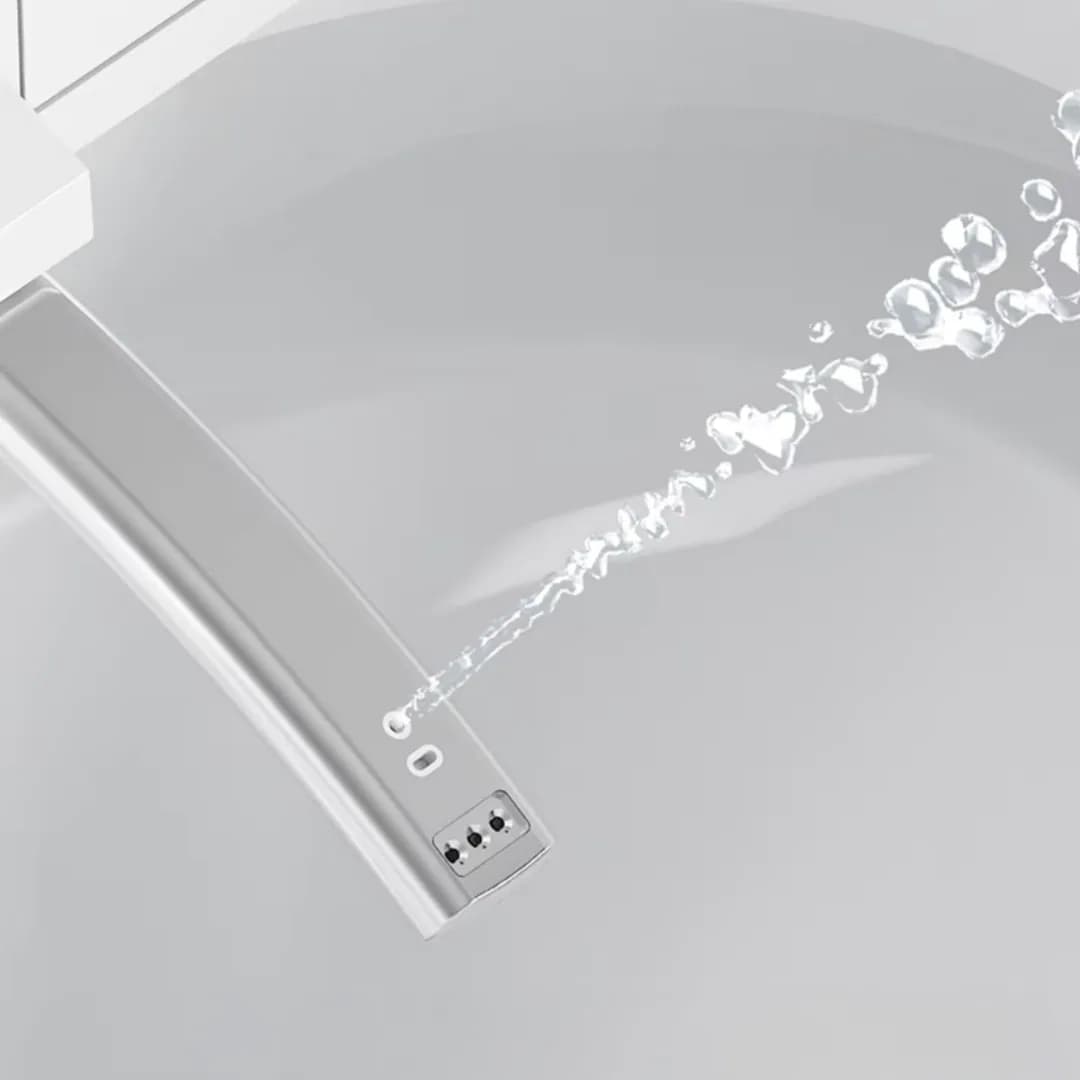
Paper smears; water cleans. That is the whole difference, and it explains why half of Asia settled the argument forty years ago. What a smart toilet actually does once you stop using paper.
If you got mud on your arm you wouldn't wipe it off with a dry napkin — you'd hold it under the tap. Nobody argues about that anywhere else on the body. This is the one place where we turned a habit into a rule.
Paper smears, water cleans
Toilet paper doesn't remove anything: it spreads it around. What's left afterwards is exactly what four seconds of warm water takes away, and it does so without friction — which is the other half of the problem. Irritation, haemorrhoids and fissures have far more to do with the rubbing than with what is being rubbed.
In Japan, where more than 80 % of homes have a toilet with integrated washing, the argument ended in the eighties. It reached Europe late, and by the usual route: first as a luxury, then as common sense.
The three numbers that matter
A good wash isn't just "spraying water". It's spraying it in the right place, at the right temperature and with the right force. Those three settings are what separate a smart toilet from an accessory with a hose:
- Temperature. Between 36 and 38 degrees. Below that it feels cold and unpleasant; above it, it dries the skin. The water has to come out warm, not be heated halfway there.
- Pressure. Adjustable in steps. What one person finds comfortable another finds uncomfortable, and the same person wants different things from a rear wash than from a feminine one.
- Position. The nozzle slides a few centimetres forwards and back. It sounds like a detail, and it is what makes the jet land where it should without you having to move.
The nozzle washes itself before and after every use, and never touches anything. It's the first question everyone asks, so it's better answered early.
And afterwards?
Warm-air drying closes the cycle, and it's the part that surprises people most: no more paper. Not "less paper" — none. The recurring purchase disappears, and with it a good share of the blockages.
Everything beyond that is comfort — the warm seat in winter, the lid that opens as you approach, the night light that saves you turning on the bathroom light, the deodoriser working while you're sitting down.
What to look at before buying
- How it heats the water. Instant, not a tank. A tank gives you three minutes of warm water and then cold.
- What the nozzle is made of. Stainless steel, self-cleaning. Plastic marks, and you end up noticing.
- What the installation needs. A water supply and an earthed socket. If your bathroom has no socket, put it in the budget beforehand, not afterwards.
- What happens in a power cut. Manual flush, always. A toilet that needs electricity to empty isn't a toilet.
Every model in our collection meets those four points; what changes between them is the installation, the size and how far the equipment goes. If you're unsure which one fits your bathroom, write to us — it's quicker than reading six spec sheets.